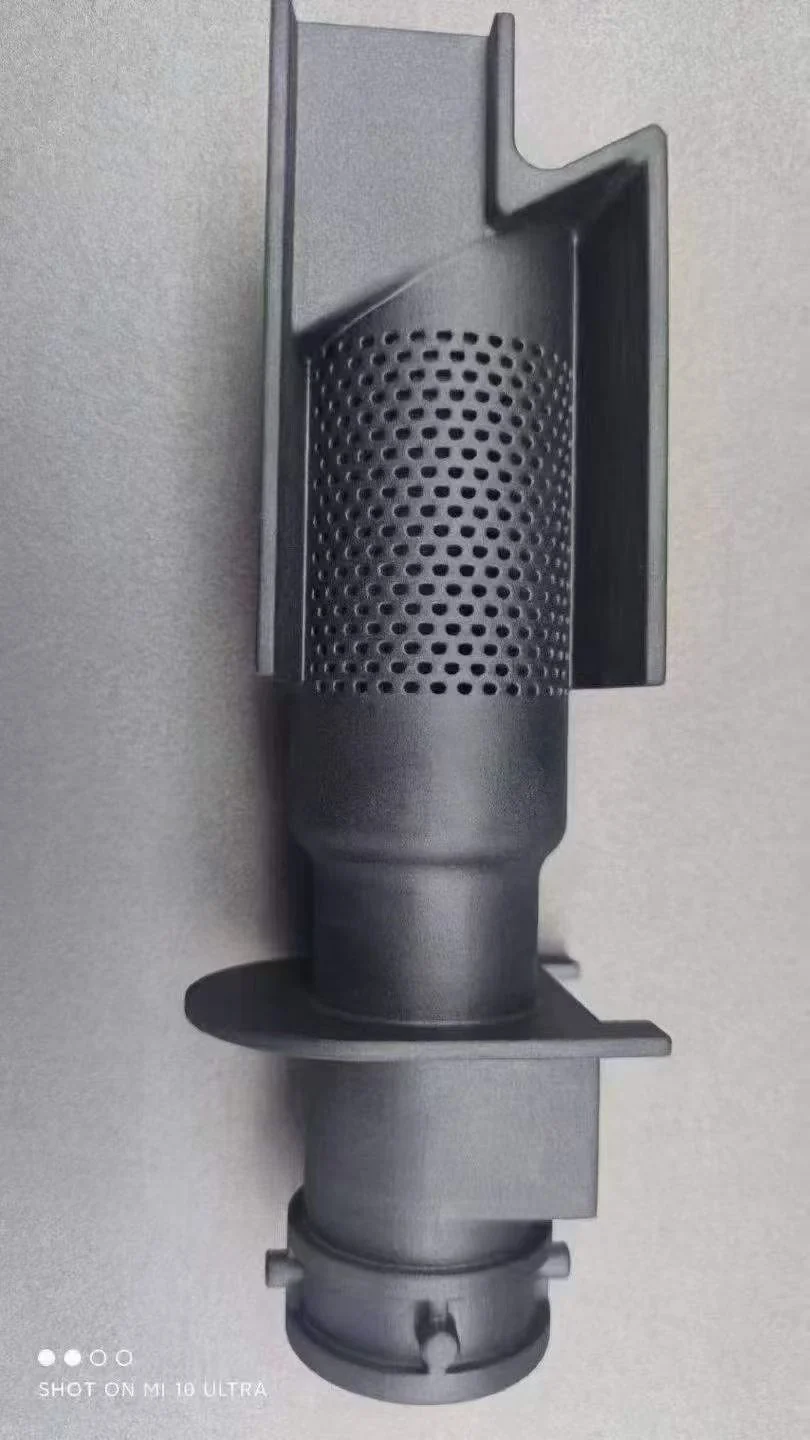
Traditional methods for creating snap-fit enclosures with living hinges and integrated clips often require support structures, increasing costs and design limitations. SLS nylon eliminates this need, enabling cost-effective production of complex geometries with enhanced functionality. This approach
Creating snap-fit enclosures with living hinges and integrated clips traditionally involves trade-offs between design complexity and manufacturability. Conventional processes like injection molding or SLA 3D printing often require support structures, limiting geometric freedom and increasing post-processing costs. SLS nylon addresses these challenges by enabling support-free production of complex geometries, making it ideal for functional prototypes and low-volume production of enclosures with integrated mechanical features.
Key Advantages of SLS Nylon for Snap-Fit Designs
SLS (Selective Laser Sintering) nylon offers distinct benefits for snap-fit enclosures compared to alternative methods: - Support-Free Fabrication: Unlike SLA or FDM, SLS nylon parts are built layer-by-layer from powdered material, eliminating the need for support structures even in overhanging or internal geometries like living hinges. - Material Durability: Nylon’s inherent flexibility and toughness allow snap-fit components to withstand repeated assembly/disassembly cycles without breaking, while maintaining dimensional stability. - Design Freedom: Complex clip mechanisms, interlocking features, and curved hinges can be integrated directly into the enclosure without compromising manufacturability.
Comparing SLS Nylon to Alternative Processes
The following table highlights key differences between SLS nylon and other common methods for snap-fit enclosure production:
| Process | Support Structures Required? | Material Properties | Typical Use Cases |
|---|---|---|---|
| SLS Nylon | No | Flexible, durable, heat-resistant | Functional prototypes, low-volume production |
| SLA Resin | Yes | Rigid, brittle, smooth surface | Visual models, master patterns |
| Injection Molding | No (but complex molds) | Wide range, high volume | Mass production |
Conclusion: SLS nylon provides the best balance of design freedom, material performance, and cost-efficiency for complex snap-fit enclosures compared to SLA or injection molding, especially in low-to-medium volumes.
Design Guidelines for SLS Nylon Snap-Fit Components
To maximize the benefits of SLS nylon for snap-fit enclosures, follow these best practices: 1. Optimize Clip Geometry: Use curved or angled clips instead of straight designs to distribute stress evenly and prevent cracking. 2. Incorporate Fillets: Add fillets (rounded edges) to stress-concentration areas like clip roots and hinge connections to improve durability. 3. Control Wall Thickness: Maintain uniform wall thickness (typically 1.5–3 mm for nylon) to prevent warping and ensure consistent flexibility. 4. Test Fit Early: Prototype snap-fit mechanisms early in the design cycle to validate tolerance stacks and assembly forces.
How SLS Nylon Supports Brand Innovation
For product designers and engineers, SLS nylon represents more than just a manufacturing process—it’s a catalyst for innovation. By eliminating support structures and enabling complex geometries, this technology allows brands to differentiate their products through unique enclosure designs, integrated functionality, and reduced time-to-market. Jinghui 3D’s expertise in SLS nylon fabrication ensures that these advantages translate into reliable, production-ready parts that meet functional requirements while maintaining aesthetic appeal.
FAQs
What is the typical lead time for SLS nylon snap-fit enclosures?
Lead times vary based on complexity, but standard projects are completed within 5–7 days, significantly faster than tooling-intensive methods like injection molding.
Can SLS nylon be used for high-volume production?
While SLS nylon excels at prototypes and low-to-medium volumes (20–1,000+ parts), injection molding remains more cost-effective for volumes exceeding 5,000 units.
What tolerances can be achieved with SLS nylon snap-fit components?
Typical tolerances for SLS nylon parts are ±0.3 mm, with tighter control possible for critical dimensions through design optimization and post-processing.