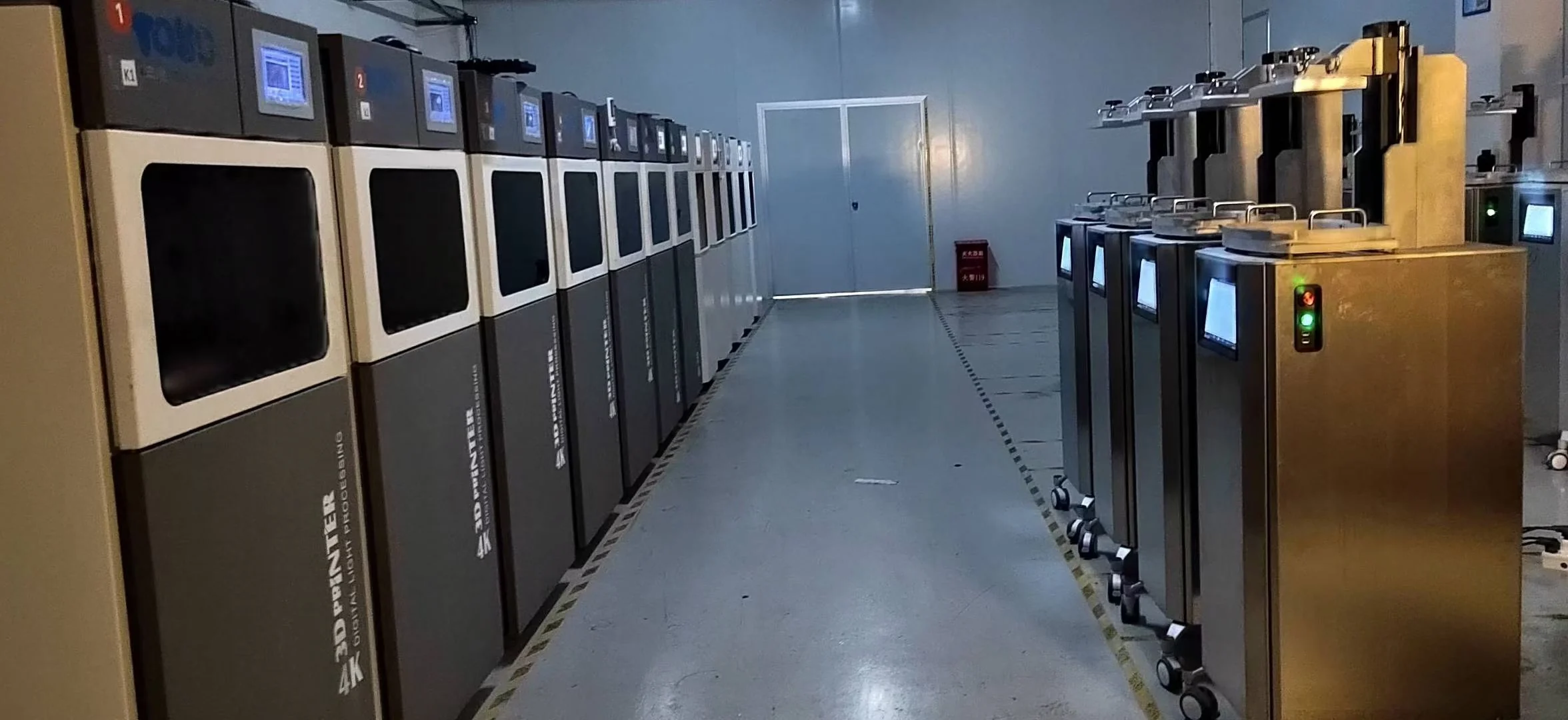
Excess inventory creates unnecessary financial and storage risk for product and procurement teams. No minimum order small-batch 3D printing enables demand-aligned production for market testing, design iteration, and on-demand spare parts to cut this risk.
For product and procurement teams, excess inventory is one of the costliest hidden risks in modern product development and aftermarket support. No minimum order small-batch 3D printing eliminates this risk by aligning production volume directly with actual demand.
No minimum order small-batch 3D printing reduces inventory risk by letting product teams produce only the units they need, when they need them, avoiding the high upfront costs and long-term storage requirements of large fixed production runs.
Jinghui 3D delivers comprehensive additive manufacturing, vacuum casting, and mold making services that support flexible no minimum order requirements for prototyping, end-use parts, and aftermarket spare parts across a wide range of industries.
Core Value Propositions of No Minimum Order Small-Batch Production
No minimum order requirements unlock three key advantages for product teams looking to cut inventory risk. First, it enables low-risk market testing for new product concepts: teams can produce 1 to 50 units to validate customer demand without committing to large production runs that leave unsold stock on shelves. Second, it supports continuous design iteration: as product teams update designs based on user feedback, they can produce new small batches without wasting existing tooling or obsolete inventory. Third, it enables on-demand spare parts production for aftermarket support, eliminating the need to hold years of spare parts inventory for discontinued product lines. All three use cases directly reduce exposure to inventory risk, the core pain point of traditional forecast-based manufacturing.
How On-Demand Manufacturing Compares to Traditional Production
| Comparison Factor | Traditional Mass Production | No Minimum Order 3D Printing |
|---|---|---|
| Upfront Capital Commitment | High (required for tooling and bulk production runs) | Low (no tooling required for most small batches) |
| Mandatory Inventory Holding | Required to meet forecasted demand | Zero for most use cases, parts produced only when ordered |
| Risk of Obsolete Stock | High, especially for updated designs or low-demand parts | Effectively eliminated, production adjusted to match current demand |
| Design Change Flexibility | Low, existing tooling must be scrapped for design updates | High, designs can be adjusted between every production run |
This comparison confirms that no minimum order on-demand manufacturing shifts the risk of excess inventory from product teams to the manufacturing partner, aligning operational costs directly with generated revenue.
Step-by-Step Workflow for No Minimum Order Small-Batch Production
- Submit your 3D CAD model, material requirements, and functional specifications for your parts
- Receive a transparent, customized quote with no hidden minimum order requirements or volume-based surcharges
- Your order is scheduled for production using the most suitable process for your part quantity and performance needs
- Finished parts undergo quality inspection and are shipped directly to your facility on your requested timeline
This streamlined workflow removes barriers to small batch production, letting product teams adapt to changing demand without inventory commitments.
Flexible Manufacturing Capabilities for All Small-Batch Needs
Providers of no minimum order additive manufacturing offer a range of processes to meet different part quantity and performance requirements. Standard 3D printing processes including SLA, SLS, and FDM support production of functional prototypes and end-use parts in a wide range of engineering materials for quantities from 1 to 20 units. For quantities between 20 and 100+ units, vacuum casting delivers production-grade polyurethane parts from a single silicone mold, matching the finish quality of mass-produced components. For larger low-volume runs of plastic or rubber parts, precision mold making and bridge tooling support consistent, high-quality production without the minimum commitments of full-scale injection molding. Many providers also offer custom new material development to meet unique performance requirements for specialized applications.
Frequently Asked Questions
What is the minimum number of parts I can order with no minimum order services?
No minimum order means there is no set minimum quantity: you can order a single custom part, 10 prototype units, or any quantity that matches your current demand. There are no hidden fees for small order sizes to meet arbitrary volume requirements.
Can no minimum order 3D printing produce parts with production-grade quality?
Yes. Modern additive manufacturing and complementary low-volume processes can produce parts with mechanical properties and surface finishes that meet the requirements of both functional prototypes and end-use products for most industries.
Is on-demand small-batch production only suitable for prototyping?
No. While it is ideal for low-volume prototyping and market testing, it is also widely used for on-demand spare parts production, low-volume end-use parts for niche products, and bridge production while full-scale tooling is being developed.
Whether you are testing a new product concept, iterating on design updates, or supporting aftermarket spare parts without carrying idle inventory, Jinghui 3D’s flexible on-demand manufacturing capabilities align with demand-driven business strategies. Contact our team today to discuss your next small-batch project and get a customized quote with no minimum order requirements.