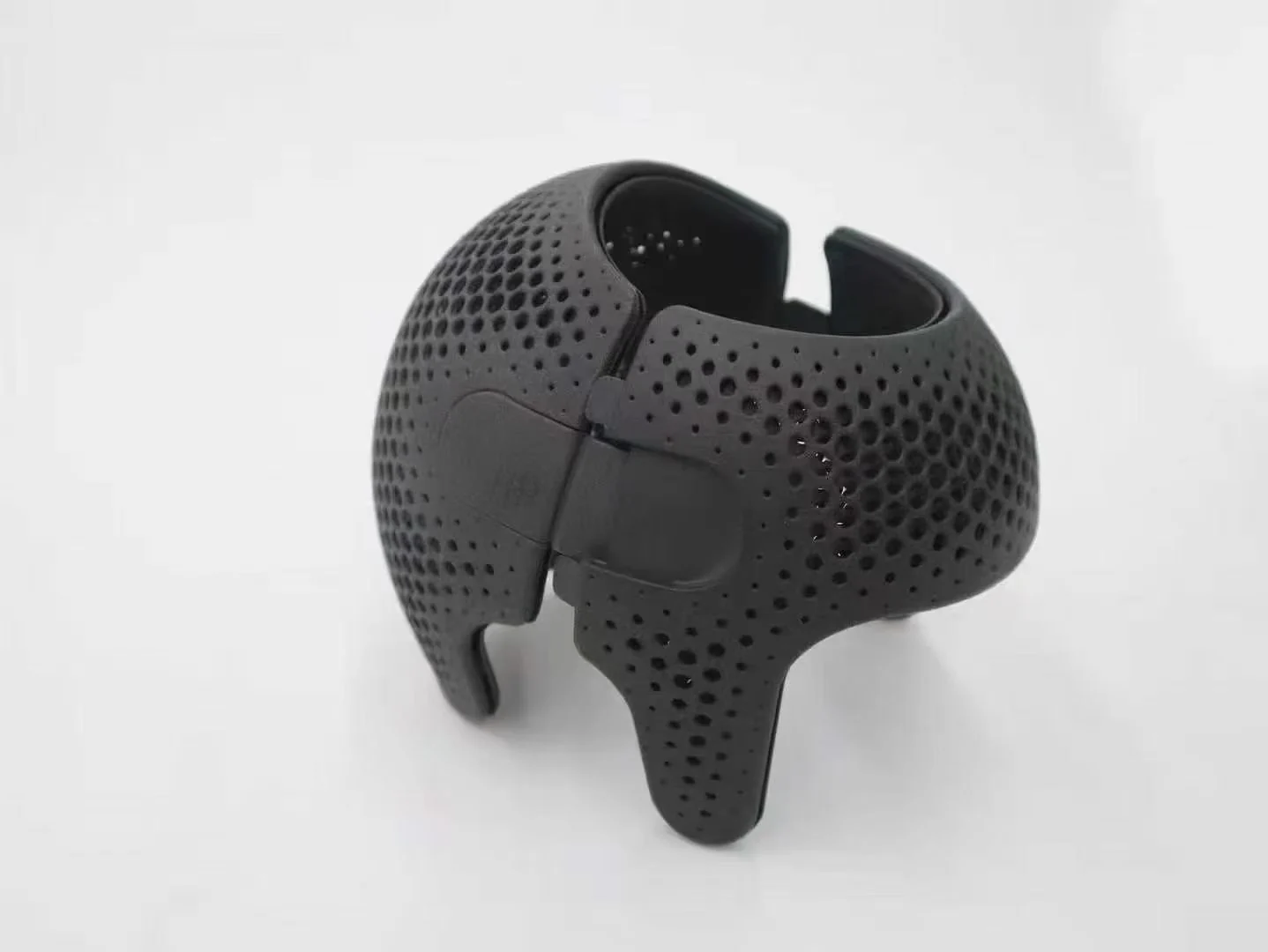
Switching suppliers between prototyping and production can introduce tolerance inconsistencies, material mismatches, delayed feedback, and unclear accountability. A single-source partner with in-house industrial 3D printing capabilities can reduce handoff gaps and help procurement teams maintain con
Working with separate suppliers for prototype development and full production creates avoidable engineering handoff risks that increase lead times, raise costs, and compromise part quality. For procurement leaders responsible for 3D printed and custom manufactured parts, mitigating these supply chain risks starts with choosing a single source supplier for the full journey from prototype to production.
Switching suppliers between prototyping and production introduces file incompatibility, tolerance drift, and finish inconsistencies, all of which can be eliminated by working with a single partner that retains full control of design and manufacturing data.
End-to-end prototype to production services from a single industrial 3D printing provider streamline workflows, reduce unnecessary delays, and help procurement teams meet their core goal of lowering overall supply chain risk.
Common Risks of Engineering Handoff Between Separate Suppliers
Many product development teams split prototyping and production across multiple vendors, assuming specialized suppliers will deliver better results for each stage. In practice, this split creates three predictable, costly challenges: - File incompatibility: Prototyping suppliers often work with native design files that require conversion or reworking when shared with a production partner. Each conversion introduces the risk of design data loss or misinterpretation, requiring extra engineering hours to correct. - Tolerance drift: Different manufacturers use different equipment, calibration standards, and quality control processes. Small variations in tolerance stacking between prototype and production can result in end parts that do not fit or perform as specified, requiring costly retooling. - Finish inconsistencies: Surface finish, color matching, and post-processing standards often vary between suppliers. A prototype with a smooth, paintable finish may not match the production part’s finish when work is handed off, leading to rejected batches and brand consistency issues. All of these challenges add up to increased supply chain risk, extended timelines, and unbudgeted costs for procurement teams.
How In-House Capabilities Eliminate Handoff Risks
A single source supplier with end-to-end in-house capabilities retains full ownership of design data, manufacturing processes, and quality standards from the first prototype to the final production part. This continuity removes the variables that cause handoff risks: - All design files remain in native format within the supplier’s engineering system, eliminating the need for file conversion and reducing the risk of data error. - Calibration and quality control processes are standardized across all production stages, keeping tolerance variation within original design specifications. - Post-processing and finishing standards are applied consistently from prototype to production, ensuring visual and functional consistency across all parts. This approach directly reduces overall supply chain risk by removing communication gaps, redundant engineering work, and unexpected quality issues that come with switching suppliers.
A Streamlined Prototype to Production Workflow
A consistent efficient journey with a single source supplier follows these core steps: 1. Initial design consultation and material selection aligned with part performance requirements and production volume targets 2. In-house industrial 3D printing of functional prototypes for testing and validation, matching end part material properties where possible 3. Iterative design adjustments based on testing results, with all changes tracked in the original design file by the same engineering team 4. Transition to bridge or low-volume production, with no transfer of data to external third parties 5. Scaling to higher volume production with retained design and quality standards, ensuring consistency across all runs
| Comparison Metric | Multiple Separate Suppliers | Single Source In-House Supplier |
|---|---|---|
| Level of Engineering Handoff Risk | High | Low |
| Required File Conversions | Multiple rounds between vendors | None; native files retained in-house |
| Typical Tolerance Variation | Frequent out-of-spec variation | Controlled to original design specs |
| Finish Consistency | Often inconsistent between stages | Standardized from prototype to production |
This comparison confirms that working with a single source supplier eliminates most avoidable variables that create preventable supply chain risk.
Core Capabilities for Reliable End-to-End Service
To deliver a seamless prototype to production journey, a supplier needs integrated in-house capabilities across multiple manufacturing processes. Leading full-service providers offer: - Industrial 3D printing services for functional prototypes and end-use parts, across a range of plastic and engineering material options. Jinghui 3D offers SLA, SLS, and FDM 3D printing services for functional prototypes and end-use parts in various materials. - Vacuum casting for low-volume production of 20–100+ polyurethane parts with production-grade finishes. - Precision mold making and tooling for injection molding and low-volume production of plastic and rubber components, from prototype tooling to bridge production. - In-house research and development capabilities for custom materials and manufacturing processes to meet unique application requirements. These integrated capabilities ensure that every stage of the product development journey remains under the same quality and process control, eliminating handoff risks.
Frequently Asked Questions
What volume ranges are best suited for end-to-end prototype to production services from a single supplier?
A full-service single provider can support everything from one-off functional prototypes to low-volume bridge production runs of hundreds of parts, with scalable tooling options that can accommodate increasing volume demands as your product scales.
Can a single source supplier accommodate custom material requirements for specialized industrial applications?
Providers with in-house R&D capabilities can support new material development to meet unique performance, durability, or regulatory requirements for specialized applications, beyond standard off-the-shelf material options.
How does working with a single partner improve supply chain transparency for procurement teams?
A single partner provides end-to-end visibility into every stage of product development and production, eliminates communication gaps between multiple vendors, and allows for faster identification and resolution of issues that could delay timelines or increase costs.
Jinghui 3D delivers integrated end-to-end prototype to production services with full in-house capabilities across industrial 3D printing, vacuum casting, and precision mold making, helping procurement leaders reduce engineering handoff risk and streamline their supply chain. To discuss your next project and learn more about our capabilities, contact our engineering team today.