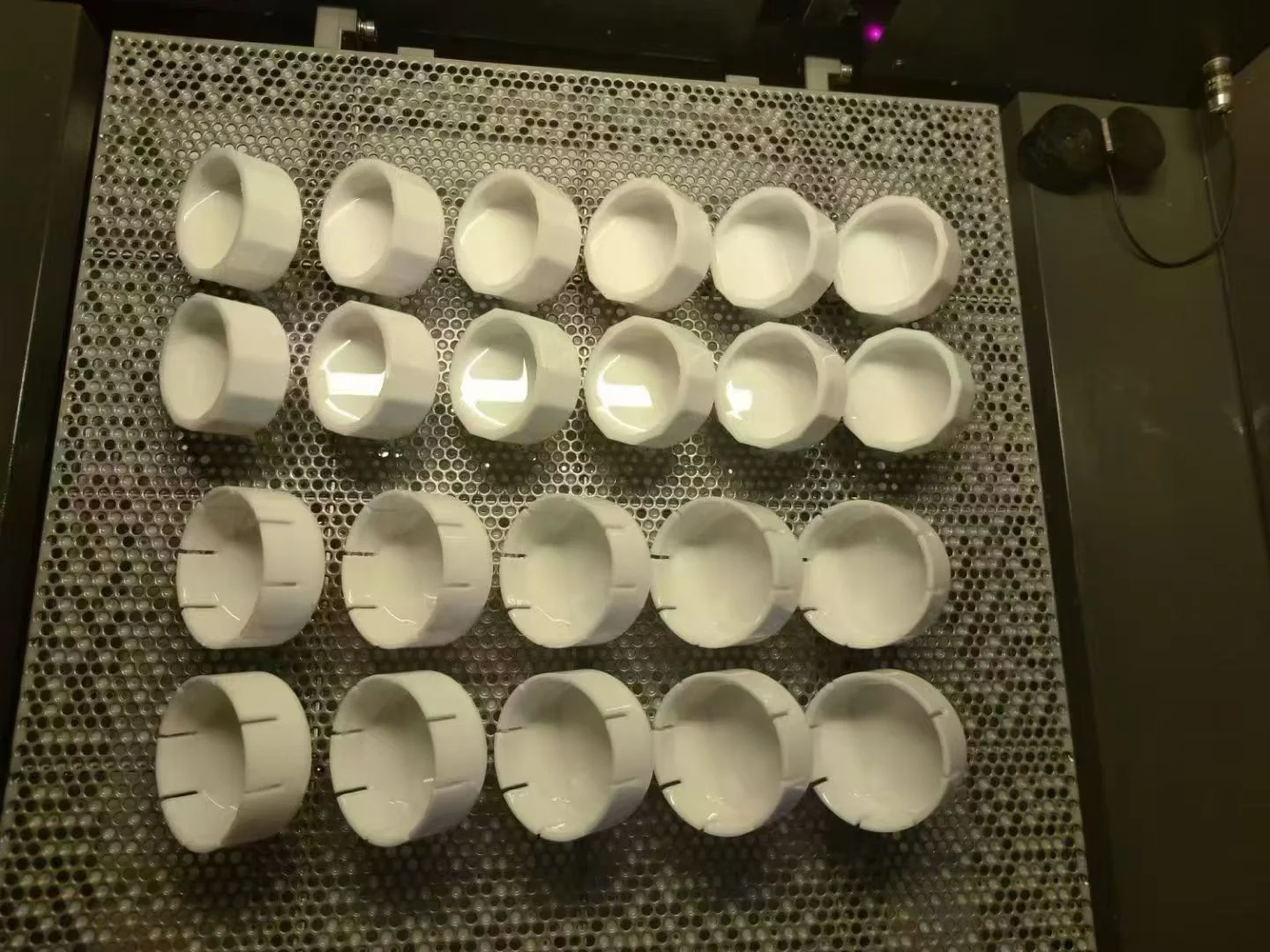
Many enterprise 3D printing projects encounter costly production delays and quality issues due to unoptimized designs that overlook manufacturability. Integrating DFM principles early in design reduces costs, shortens lead times and delivers consistent production-ready 3D printed parts.
For enterprise production using 3D printing, design choices directly determine final part quality, production cost, and time to market; implementing systematic Design for Manufacturing (DFM) for 3D printing eliminates manufacturability issues before production begins, delivering consistent, production-ready outputs.
DFM for 3D printing is a design optimization framework that adjusts part geometries, material selection, and tolerances to align with 3D printing production capabilities, improving manufacturability and reducing production risks.
Jinghui 3D integrates DFM principles into all 3D printing and low-volume production services, helping enterprise clients avoid costly redesigns and deliver parts that meet functional and production requirements.
Core Principles of DFM for 3D Printing Design Optimization
The core goal of DFM in 3D printing is to prioritize manufacturability without sacrificing the functional or aesthetic requirements of a part. Key principles that guide effective design optimization include aligning design features with the specific capabilities of the chosen 3D printing process, matching material properties to end-use performance needs, optimizing tolerances to avoid unnecessary production costs, and reducing the need for excessive post-processing. Unlike traditional subtractive manufacturing, 3D printing allows for complex geometries that would otherwise be impossible to produce, but DFM ensures these complex features do not create unforeseen production bottlenecks or quality issues.
Step-by-Step DFM Optimization Workflow for 3D Printing
An effective DFM workflow integrates design checks early and often to avoid late-stage changes: 1. Initial design review against production technology constraints, including maximum part size, minimum feature size, allowable overhang angles, and unsupported feature limits for the chosen 3D printing process 2. Material selection validation to confirm that the chosen material meets both functional requirements and process compatibility for consistent production 3. Geometry adjustment to eliminate unnecessary overhangs, reduce excess material usage, minimize support material requirement, and improve overall part strength 4. Tolerance optimization to balance functional needs and production capability, as unnecessarily tight tolerances increase production time and cost without adding value 5. Final manufacturability audit and small-batch prototyping test to validate design adjustments before full production begins
DFM Optimization Impact: Key Comparisons
To understand the value of DFM optimization for 3D printing, the following table compares outcomes for designs with and without integrated DFM:
| Metric | Design without DFM Optimization | Design with DFM Optimization |
|---|---|---|
| Redesign requirement | Common post-production redesign to fix manufacturability issues | Rare redesign after initial pre-production validation |
| Total production lead time | Extended due to unplanned issue remediation | Streamlined with pre-emptive issue resolution |
| Total production cost | Higher from material waste and rework labor | Lower from reduced waste and eliminated rework |
| Part consistency across runs | Variable output that often fails specification checks | Consistent output that meets all defined specifications |
This comparison confirms that DFM optimization reduces avoidable production risks and aligns 3D printed parts with enterprise production requirements from the early design stage.
End-to-End DFM Support From Jinghui 3D
Jinghui 3D integrates DFM principles into every stage of 3D printing and manufacturing service delivery, supporting enterprise clients from prototyping through low-volume production. The company offers multiple core 3D printing processes including SLA, SLS, and FDM, producing functional prototypes and end-use parts across a range of engineering materials. For clients requiring 20–100+ production-grade polyurethane parts, Jinghui 3D delivers vacuum casting services that replicate parts from a single silicone mold, with options for painted or plated finishes. For injection molding and low-volume production of plastic and rubber components, Jinghui 3D provides precision mold making and tooling from prototype tooling through bridge production. The company also maintains in-house R&D capacity for new material development and additive manufacturing equipment manufacturing, allowing it to adapt DFM optimization approaches to novel application and material requirements.
Frequently Asked Questions
-
When should DFM optimization be implemented in my 3D printing project? DFM optimization should be implemented as early as the conceptual design stage, rather than after a final design is completed. Early integration identifies manufacturability issues before significant resources are invested in design development, reducing overall project cost and timeline.
-
Can DFM principles be applied to both prototyping and end-use production 3D printing? Yes, DFM principles adapt to both use cases. For prototyping, DFM focuses on faster iteration and lower prototype production costs. For end-use production, it focuses on long-term consistency, scalability, and compliance with strict functional and aesthetic specifications.
-
Do I need in-house DFM expertise to use Jinghui 3D’s 3D printing services? No, Jinghui 3D’s experienced engineering team includes built-in DFM review and design optimization as a standard part of all manufacturing services. Clients do not need dedicated in-house DFM expertise to receive production-ready parts that meet all requirements.
For enterprise project leaders and procurement managers responsible for 3D printed part production, integrating DFM early in the design process eliminates costly surprises and delivers more reliable outcomes. Partnering with a full-service manufacturing provider that embeds DFM into every step of the process ensures your project stays on time and on budget. Contact Jinghui 3D today to discuss your next 3D printing project and request a DFM design review.